
What Is a 409A Valuation? The Founder's Quick Guide

Understand 409A valuation, why startups need it, how it works, and what founders should know about compliance and fair market value
If you're issuing stock options at your startup, you've probably heard the term "409A valuation" ,usually said with a slightly stressed tone.
A 409A valuation is an independent appraisal that determines the fair market value (FMV) of your company's common stock. Startups use this number to set the strike price for employee stock options, legally and safely.
It's named after Section 409A of the U.S. tax code, which exists to stop companies from handing out underpriced stock options as a sneaky way around taxes.
Why Does It Matters?
If your stock options are priced too low without a proper valuation to back them up, employees can get hit with:
- Immediate income tax on the options even before they exercise them
- A 20% federal penalty tax on top of that
- Possible state penalties too
A 409A valuation protects your team from that nasty surprise and protects your company from liability.
Who Needs One?
Pretty much any private US company issuing stock options, including:
- Venture-backed startups
- Bootstrapped companies offering equity
- Companies nearing a funding round, acquisition, or IPO
If equity is part of your hiring strategy, this isn't optional.
How Often Do You Need a New One?
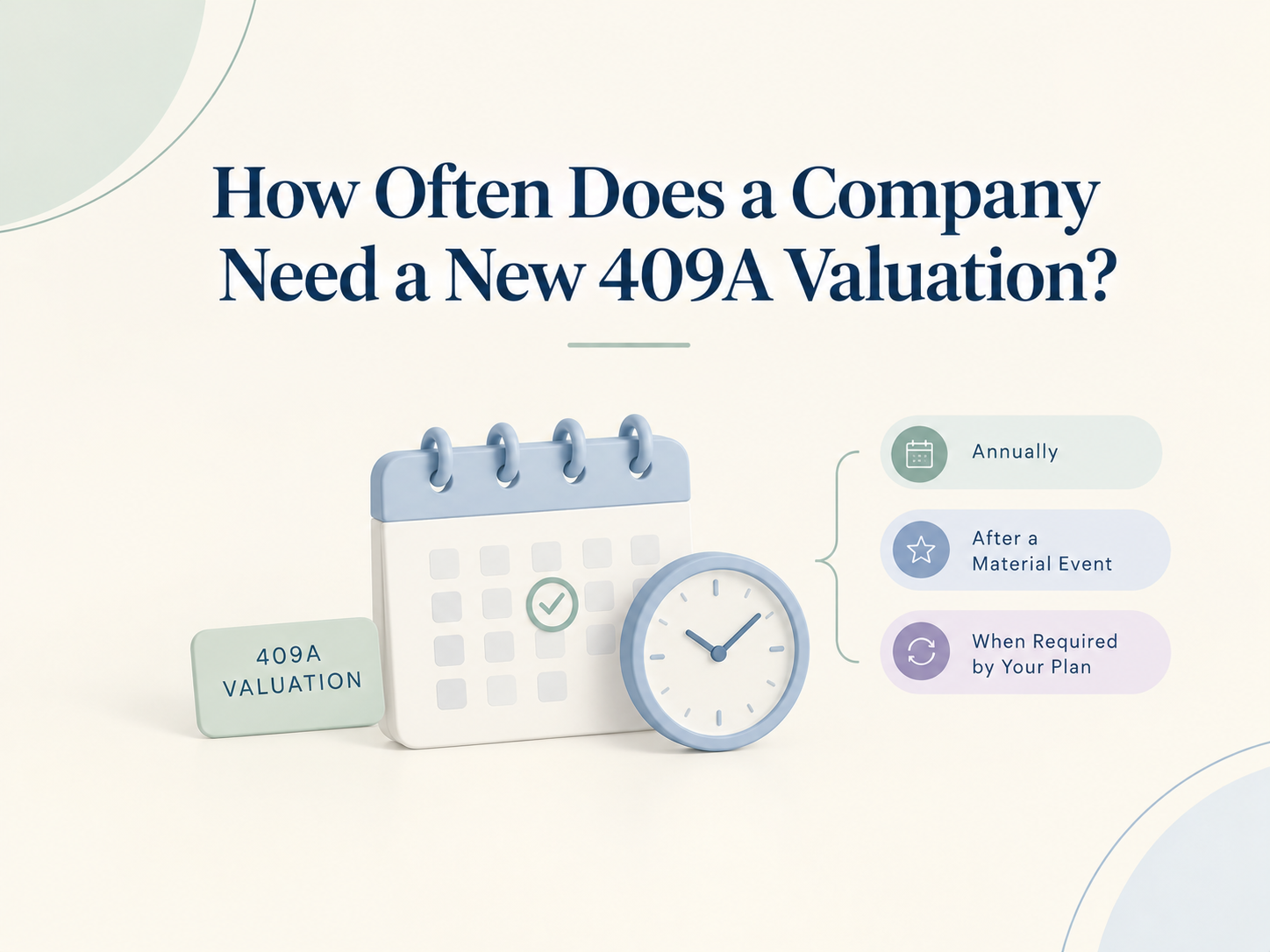
A 409A valuation is valid for 12 months or until a "material event" happens, whichever comes first. That includes:
- A new funding round
- Major revenue changes
- M&A activity
- IPO prep
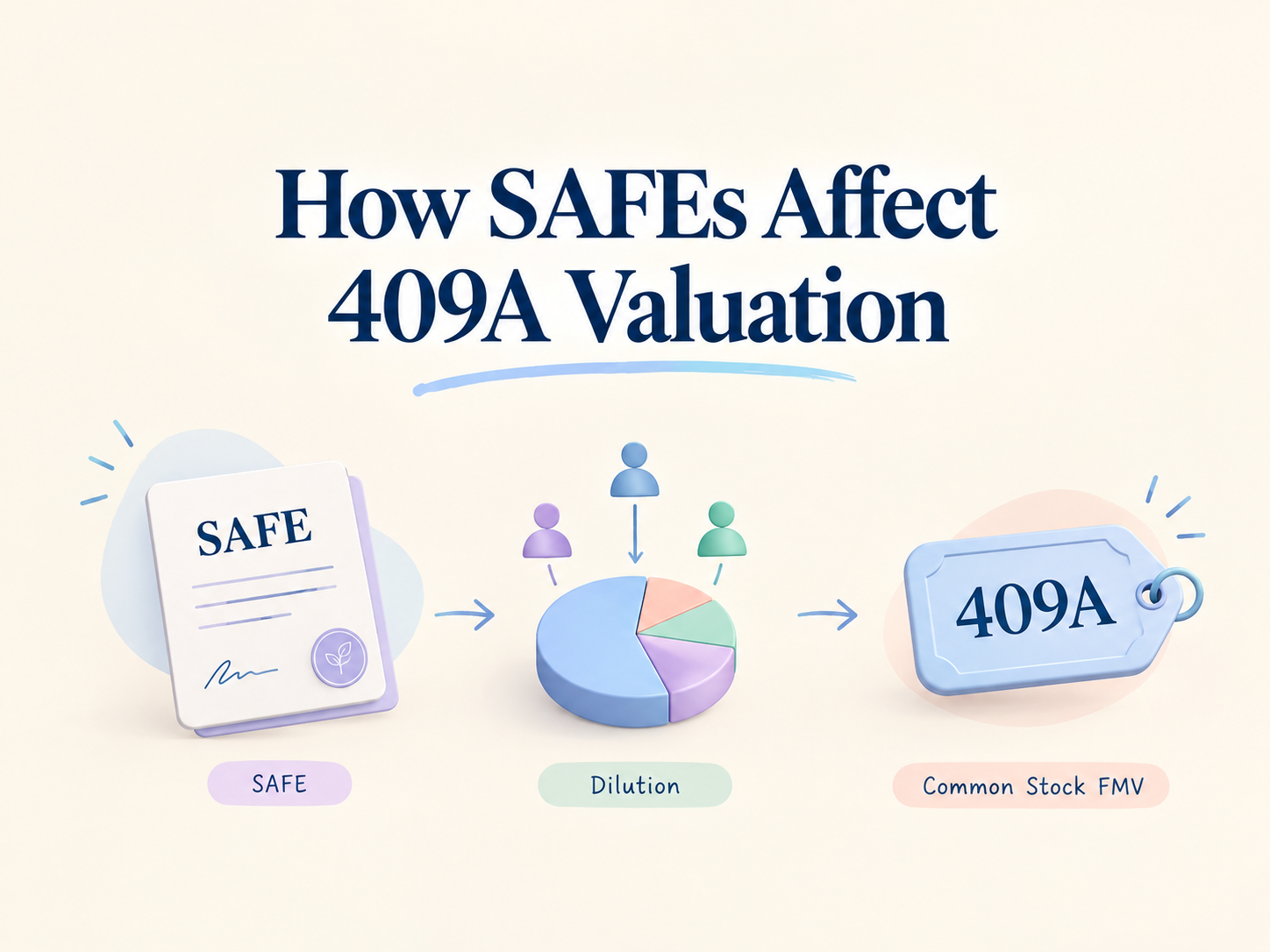
One thing that surprises founders: your 409A number is usually lower than your last fundraising valuation. That's normal, preferred stock (what investors get) has more rights than common stock (what employees get), so it's valued differently.
A 409A valuation isn't just a compliance box to check. It protects your company, your investors, and your employees from tax headaches down the road. If it's been over a year since your last one, or you're planning to issue new options soon, it's time to get it done.