
Updating Your 409A Valuation After a Priced Funding Round

Learn when and why to update a 409A valuation after a priced funding round, including changes in company value, capitalization, preferred stock terms, and the fair market value of common stock.
A priced funding round sets a new preferred stock price agreed upon by investors, and this is treated as a material event under IRS rules. A material event almost always requires a fresh 409A valuation, for a few reasons:
- New price signal: Investors have just established what the market believes the company is worth
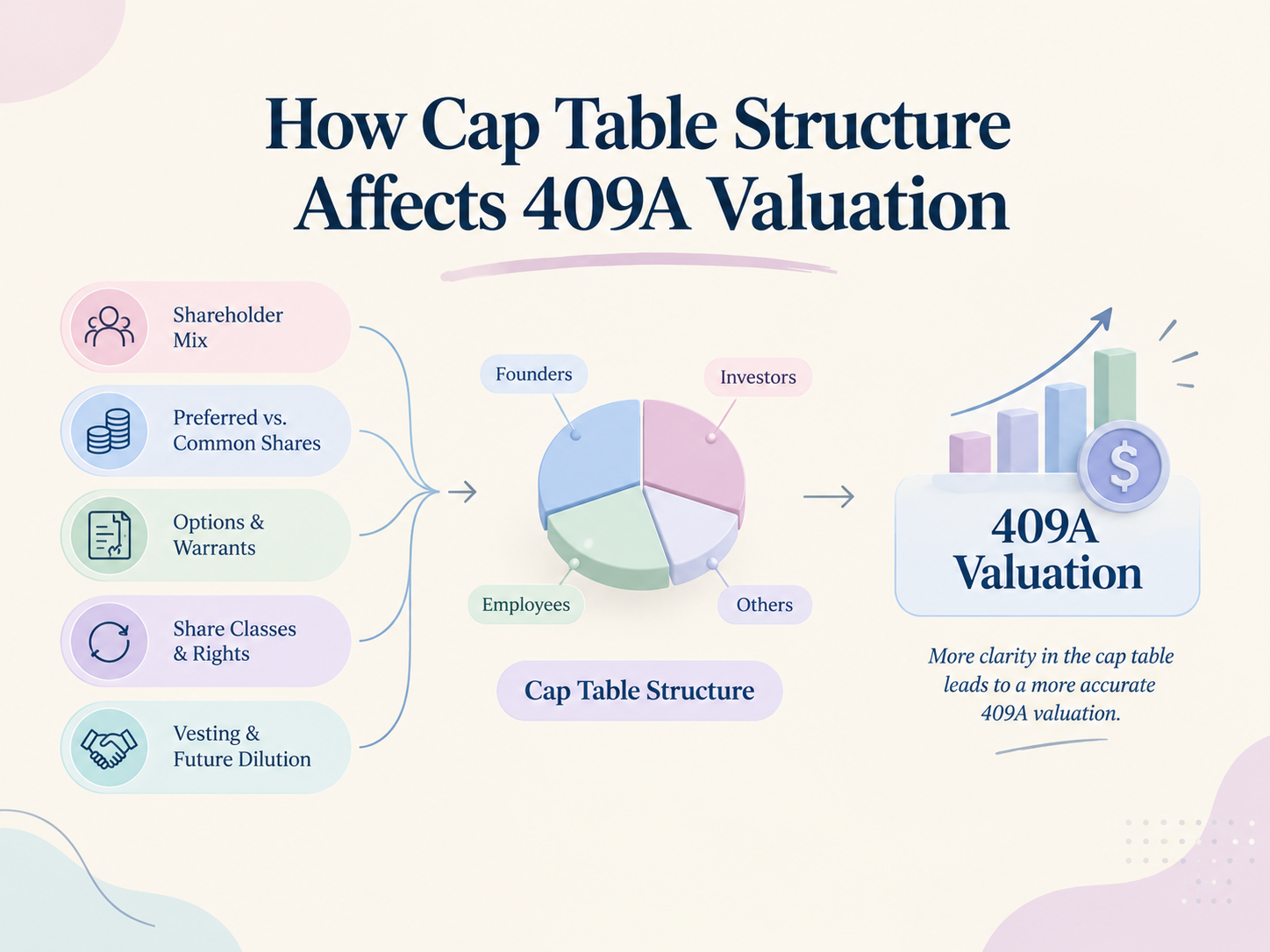
- Changed cap table: New preferred shares typically carry different rights, preferences, and liquidation terms than earlier classes
- Safe harbor limits: A 409A valuation only qualifies for IRS safe harbor protection for 12 months, or until a material event occurs, whichever comes first
Granting options at the old strike price after a new round creates compliance risk. Auditors and the IRS expect the valuation to reflect current conditions.
A new 409A valuation should be completed within 30 days of the round closing. Waiting longer creates a gap where the company must either:
- Pause option grants until the new valuation is ready, or
- Grant options at a stale price that no longer reflects fair value
Most companies line up their valuation provider before the round closes so the process can start immediately.
How the Valuation Method Shifts
A priced round often changes the valuation approach, not just the resulting number.Before the round, many early-stage companies use the Option Pricing Model (OPM), which treats each share class as an option on the company's total equity value.
After a priced round, valuators often shift toward or blend in the Backsolve method. This uses the price investors just paid for preferred shares to work backward and imply a value for the whole company, then allocates that value across share classes based on their respective rights.
As a company nears acquisition or IPO, valuations may also incorporate the Probability-Weighted Expected Return Method (PWERM), which models multiple future outcomes such as an exit, remaining private, or dissolution. The resulting common stock value typically comes out lower than the new preferred price per share. This is expected, since preferred stock carries protections like liquidation preferences that common stock does not.
Information to Prepare
To keep the process on schedule, have these ready for the valuation firm:
- Final round documents (SAFE, convertible notes, or stock purchase agreement)
- Updated cap table reflecting the new round
- Post-money valuation and price per share from the round
- Updated financials and projections
- Details on any new investor rights or preferences
Risks of Delaying
Skipping or delaying an updated 409A after a priced round can lead to:
- Incorrect strike prices on new option grants, exposing employees to IRS penalties under Section 409A, including immediate taxation and a 20% additional tax
- Audit complications during due diligence for a future round or acquisition
- Investor scrutiny, since sophisticated investors and their counsel routinely check for this
A priced funding round resets the clock on a company's 409A valuation. The new valuation should be completed within 30 days, the methodology often shifts toward the price investors just paid, and the resulting common stock value typically lands below the new preferred price. Keeping this current protects employees from tax exposure and keeps the cap table audit-ready for the next round, acquisition, or IPO.