
10 Common Challenges in US Business Valuation

Explore 10 key challenges in U.S. business valuation, from selecting the right valuation method and estimating market inputs to assessing risk, forecasting cash flows, and addressing complex ownership structures.
Valuing a US business sounds like a matter of running the right formula. In practice the formula itself rarely causes problems. The real trouble comes from a common practical challenges that pop up in almost every situation—whether its closing a sale handling a divorce settling a shareholder disagreement or filing taxes. These issues keep showing up no what kind of case you're dealing with.
1.Separating Personal Goodwill From Business Goodwill
In many closely held businesses, a meaningful share of the company's success rests on one owner's personal relationships, reputation, or expertise rather than transferable, business-level goodwill. Courts and buyers treat these differently. Personal goodwill is rarely considered part of a businesss value especially in divorce proceedings. Courts and buyers both need to see the difference. When personal goodwill is mixed into a valuation the valuation overstates what an actual buyer would pay.
2. Thin or Unreliable Financial Records
Small and mid-sized private businesses frequently maintain financials that mix personal and business expenses, use inconsistent accounting methods year to year, or simply lack the rigor of an audited public company. Before any valuation method can be applied meaningfully, these financials typically need real normalization — adjusting for owner compensation, one-time items, and non-arm's-length related-party transactions.
3. Finding Genuinely Comparable Companies
Public company comparables are often larger, more diversified, and fundamentally different in risk profile from the private company being valued. Private transaction databases help, but comparable deal data can be thin for niche industries or unusual business models, forcing valuers to widen the comparable set in ways that introduce their own distortions.
4. Estimating a Defensible Discount Rate for a Private Company
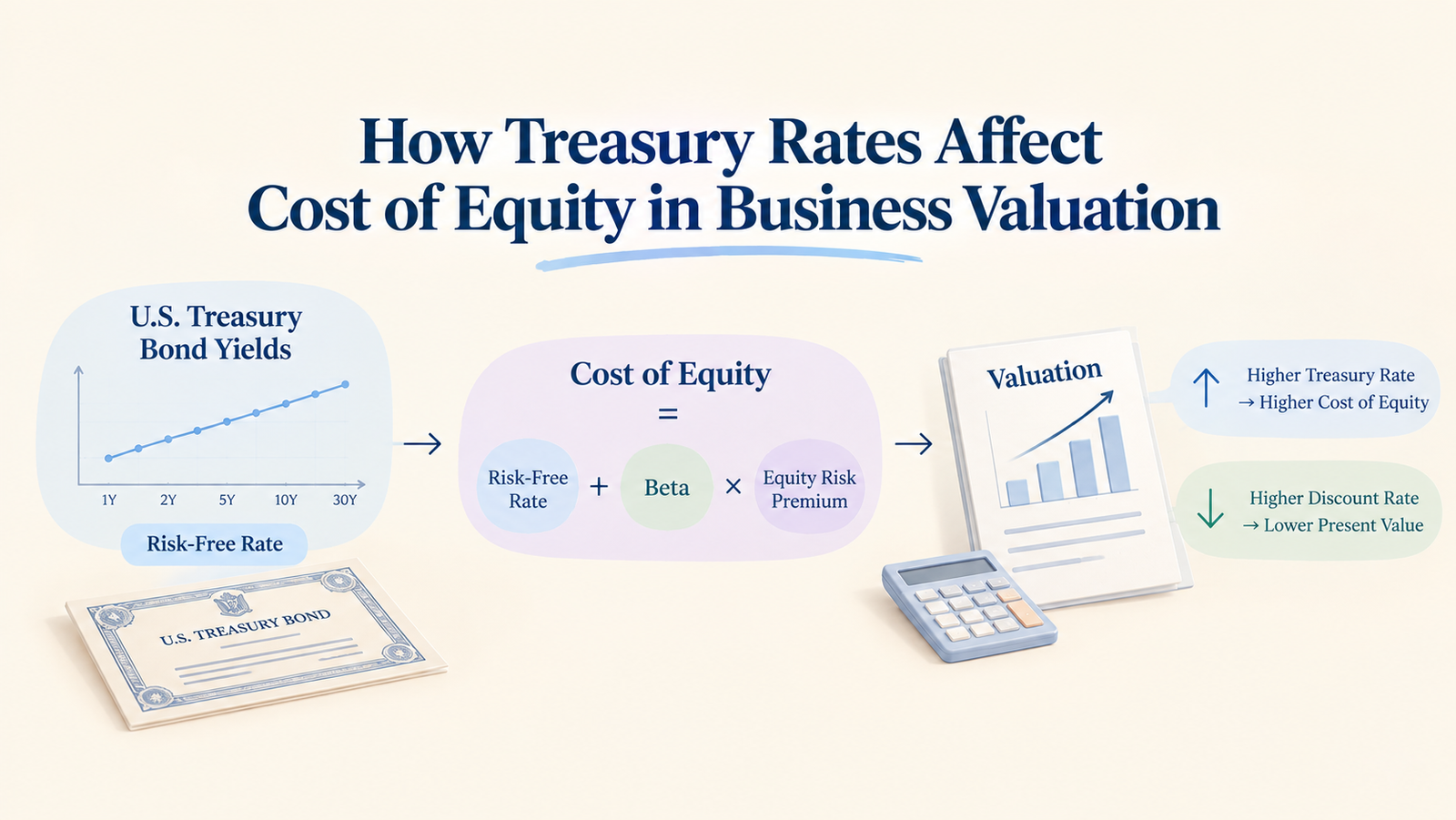
Without an observable market price, deriving cost of equity requires borrowing beta from public comparables, adding a size premium, and often layering in a company-specific risk premium. Each step introducing genuine judgment that a skeptical reviewer can challenge.
5. Standard of Value Confusion
Fair market value, fair value, investment value and liquidation value are not the thing and the rule that is right often depends on the exact legal or regulatory situation. In one state a shareholder dispute might ask for value with no minority discount. In that state a tax appraisal could allow both DLOM and DLOC. Applying the wrong standard produces a technically competent valuation that's simply answering the wrong question.
6. Distinguishing Standalone Value From Strategic Value
A valuation prepared for litigation or a minority buyout should generally reflect standalone value, not the synergies a specific strategic acquirer might realize. Conflating the two. Often because a recent synergy-inflated offer is used as an anchor. Produces a number that doesn't hold up to the standard actually required.
7. Volatile or Cyclical Earnings
Businesses that truly have revenue or that have just experienced an odd year such, as a pandemic‑driven spike or a one‑off contract needs careful normalization of the earnings base that will be capitalized or projected. Using an unadjusted recent year, whether unusually strong or weak, as the foundation for a multiple-based valuation skews the result in either direction.
8. Unsupported or Formulaic Discounts
DLOM and DLOC are frequently applied using flat percentages pulled from published studies, without a documented analysis tying the specific discount to the company's actual liquidity prospects, transfer restrictions, or minority rights. This is one of the most commonly challenged elements in litigation and IRS review alike.
9. Reconciling Multiple Valuations of the Same Company
A company that has a 409A valuation, a recent financing round, and perhaps a valuation prepared for litigation can show meaningfully different numbers, each legitimately reflecting a different premise or date. Without a documented explanation for the divergence, each valuation becomes more vulnerable to challenge rather than mutually reinforcing.
10. Communicating Valuation Judgment to Non-Financial Audiences
A valuation ultimately has to persuade a judge, a jury, an IRS examiner, or a business owner who isn't a finance professional. A report that is technically correct but doesn't explain its main decisions, in language often loses trust not because the numbers are wrong but because people can't follow the reasoning. The report doesn't explain why this discount rate was used why these companies were chosen as comparisons and why this way of valuing was selected. The problem is not the analysis itself. The fact that it wasn't clear. The report wasn't understood. The report wasn't explained. The report wasn't made easy to follow.
Most challenges, in US business valuation come from US business valuation judgment calls that were not documented enough to survive scrutiny. US business valuation needs the standard of value a properly normalized earnings base, a reasonable discount rate and a genuinely comparable peer set. Getting the formula right has never been the hard part; defending every assumption behind it is.