
Common Mistakes in 409A Valuation
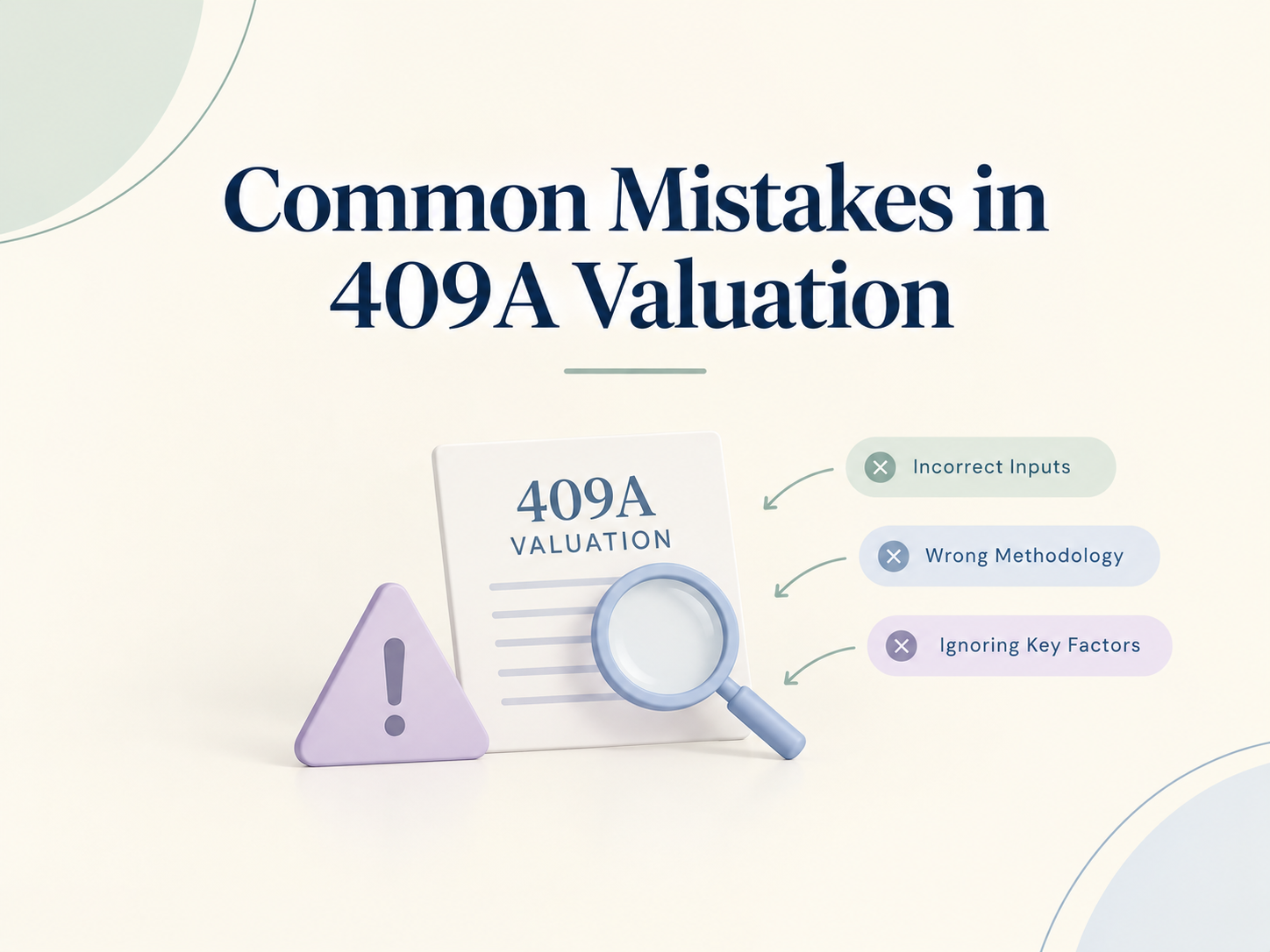
Explore the common mistakes in 409A valuation, from outdated financial data and incorrect assumptions to cap table errors, market adjustments, and overlooking key valuation factors.
A 409A valuation determines the fair market value of a private company’s common stock and, in turn, the strike price for employee stock options. Getting it right provides an important layer of protection. Getting it wrong can leave employees facing a 20% additional federal tax, plus interest, on options priced below fair market value. The company may also have to deal with penalties and uncomfortable questions from auditors and investors.
The good news is that most 409A problems are not the result of complicated valuation theory. They usually come down to a few avoidable mistakes.
1. Letting the Valuation Go Stale
A valuation prepared by a qualified independent appraiser is generally presumed reasonable for up to 12 months, as long as there have been no material changes in the business. That does not mean a valuation is automatically valid for 12 months. A new funding round, an acquisition offer, a major customer contract, or a significant change in financial performance can make an existing valuation outdated well before its anniversary.
2. Ignoring Material Events
This is closely connected to the first mistake: failing to update the valuation when something significant happens. A priced funding round is the obvious example, but it is not the only one. A term sheet, a major customer win or loss, a down round, or a significant change in the company’s business plan may also affect value. Continuing to issue options based on an older, lower valuation after a funding round is one of the more common and potentially costly mistakes.
3. Treating the Preferred Share Price as the Common Share Value
Investors typically purchase preferred stock, which can come with liquidation preferences, anti-dilution protection, and other rights that common stockholders do not have. Because of these differences, the latest preferred share price should not simply be used as the value of common stock. Doing so can overstate the value of common shares, while assigning an unrealistically low value can also raise questions.
A proper valuation starts by determining the value of the company as a whole and then allocating that value among the different share classes. Methods such as the option pricing model or a probability-weighted approach may be used for this allocation.
4. Starting With an Inaccurate Cap Table
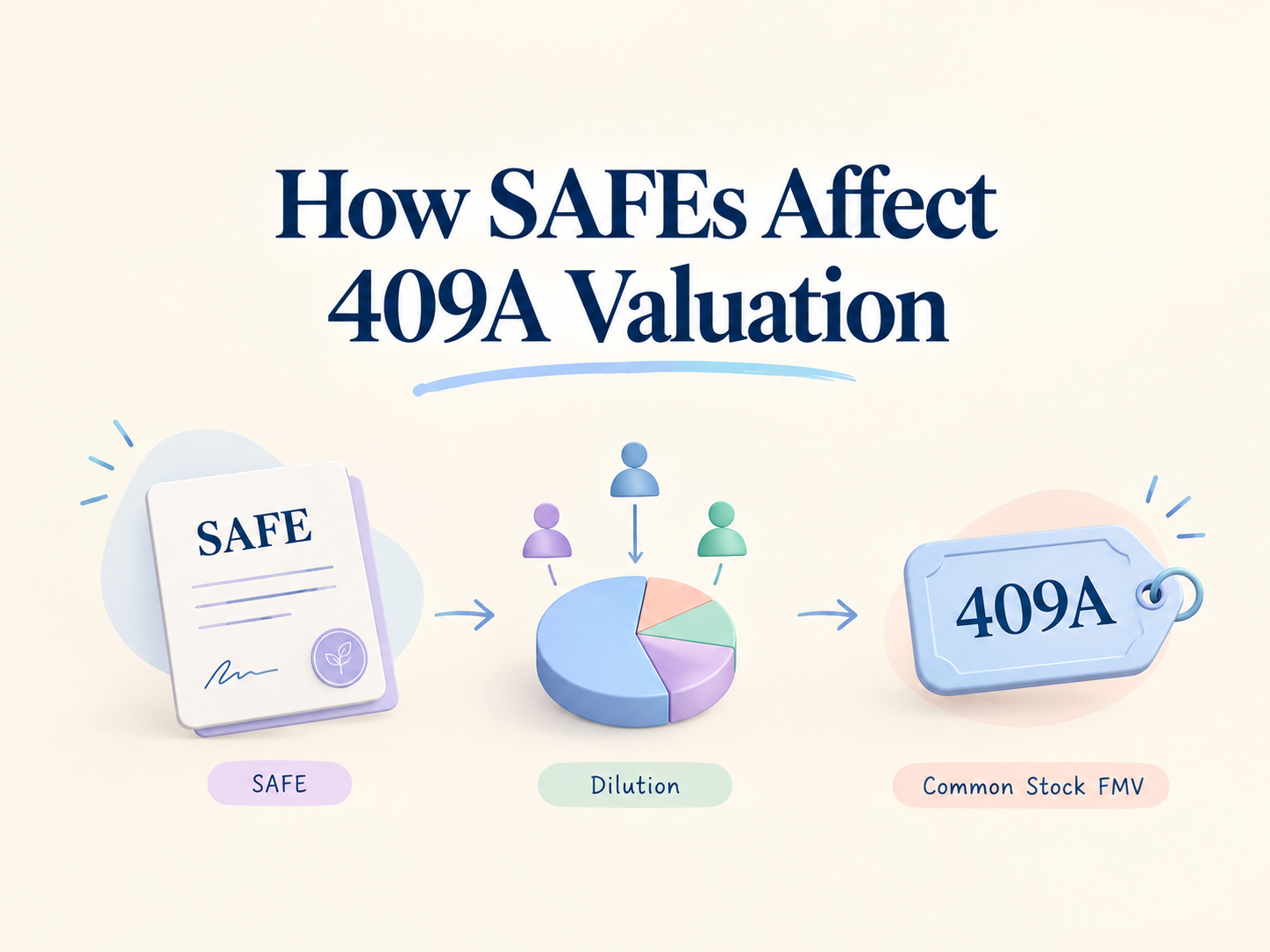
The allocation of value depends heavily on the company’s ownership structure. If the cap table is wrong, the valuation can be wrong too. Common issues include missing options or warrants, convertible notes and SAFEs that have not been reflected correctly, outdated option pool figures, and incorrect liquidation preferences. Before sending the cap table to the valuer, reconcile it with the company’s legal and financing records.
5. Skipping or Misapplying the Marketability Discount
Common shares in a private company are not as easy to sell as shares in a public company. For that reason, 409A valuations generally consider a discount for lack of marketability. The appropriate discount should be supported by factors such as the expected time to a liquidity event and the company’s volatility. Simply applying a standard percentage without supporting the assumption can make the valuation difficult to defend.
6. Relying on Unrealistic Projections
Aggressive projections can push the valuation too high, while overly conservative forecasts can make the company appear less valuable than it really is. The key is consistency. Financial projections should reasonably align with the company’s track record, board-approved plans, fundraising materials, and recent performance. Valuers and auditors often compare these sources, so major inconsistencies can raise questions.
7. Overlooking Secondary Sales and Acquisition Offers
Transactions involving the company’s shares can provide useful evidence of value. For example, if founders or employees have sold shares to investors, or if the company has received an acquisition proposal, those events may be relevant to the valuation. Ignoring them can make the valuation appear incomplete and invite additional scrutiny.
8. Using an Unqualified Provider
The safe-harbor presumption applies to valuations prepared by a qualified independent appraiser. Valuing the shares internally, or relying on a provider without relevant 409A experience, can weaken that protection. The qualifications and independence of the person preparing the valuation matter.
9. Not Giving the Valuer Complete Information
A valuer can only assess what they know. Leaving out important information—such as board minutes, recent acquisition offers, debt terms, or updated financial statements can result in a valuation based on an incomplete picture of the business. It is better to provide too much relevant information than to leave out something that could materially affect the analysis.
10. Granting Options Before the Valuation Is Final
The exercise price of an option should be based on a valuation that is already in place. Granting options first and determining the valuation afterward, or continuing to use an old valuation after a material event, can create the very tax and compliance risks the 409A process is designed to prevent.
A 409A valuation should not be treated as a once-a-year box to check. Think of it as an ongoing process that needs to be revisited when the company changes. Refresh the valuation after material events, even when the 12-month period has not expired. Keep the cap table accurate, make sure projections are consistent with the company’s other materials, provide the valuer with complete information, and work with a qualified independent provider.
Most importantly, keep good records. If the valuation is ever questioned, your position will be much stronger if you can demonstrate that the company followed a reasonable and well-documented process.Tax rules can change, and the right approach depends on the company’s specific circumstances. Companies should confirm the current requirements with a qualified tax or valuation advisor.