
What Compliance Standards Must a 409A Valuation Meet?
Understand the key compliance standards a 409A valuation must meet, including IRS requirements, reasonable valuation methods, supporting documentation, and the factors needed to establish a defensible fair market value.
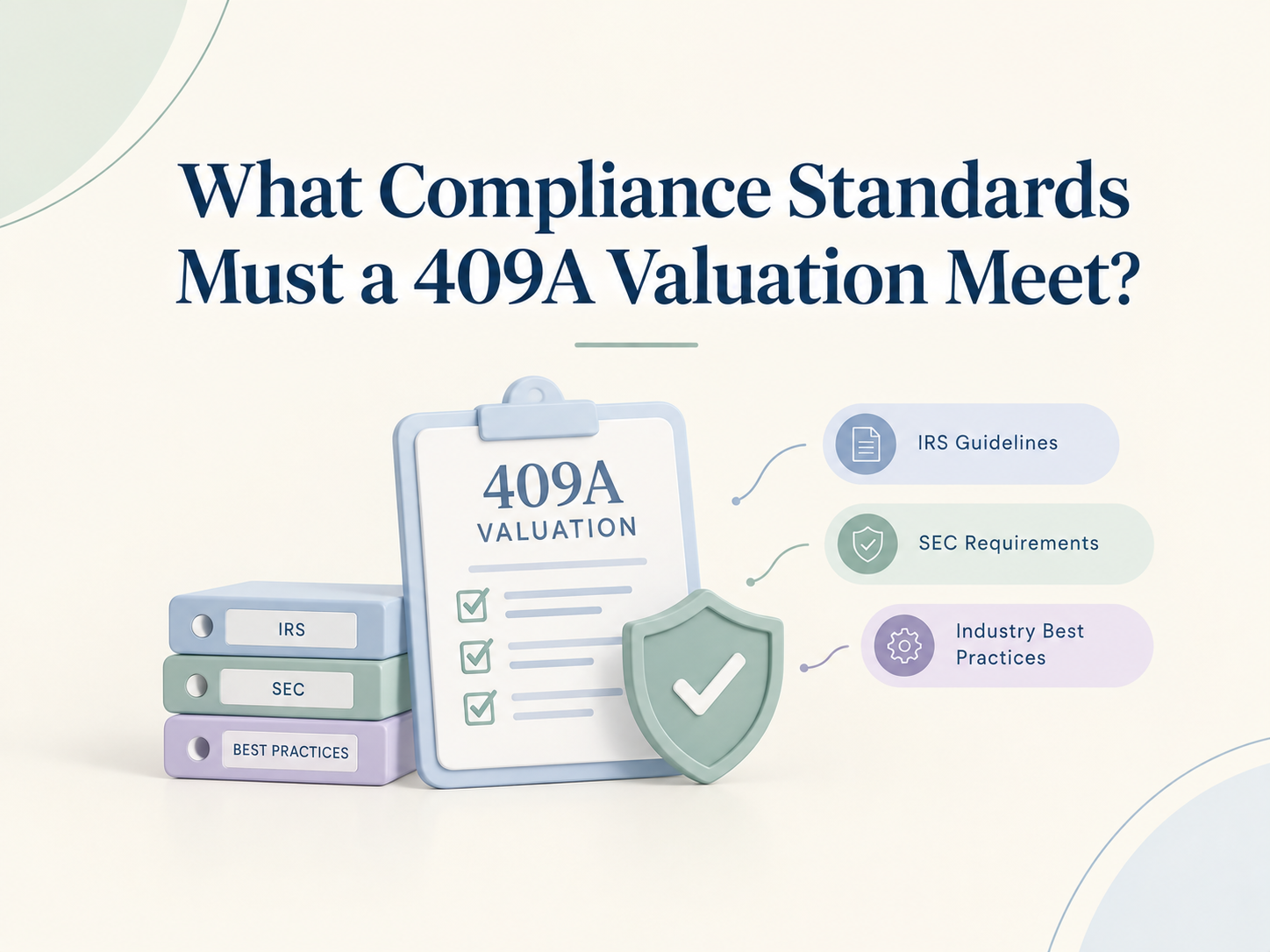
A 409A valuation is only useful if it can be relied on. For option grants, the value has to meet the standards in the US tax rules, or the protection it is meant to give disappears. Here is what a compliant valuation looks like.
The Legal Starting Point
Section 409A of the US Internal Revenue Code governs deferred compensation. Stock options are exempt from it only if the exercise price is at least the fair market value of the underlying stock on the grant date. For a private company, there is no market price, so the company must determine fair market value using a reasonable method. The Treasury regulations define what is reasonable and offer three presumptions of reasonableness, which are the safe harbors.
The Three Safe Harbor Methods
1. Independent appraisal. A valuation by a qualified independent appraiser is presumed reasonable if it is as of a date no more than 12 months before the grant. This is the route most companies take.
2. Formula valuation. A formula used consistently for all compensatory and non-compensatory purposes, such as certain buy-sell arrangements, can qualify.
3. Illiquid start-up valuation. A written valuation for a young company with no readily tradable stock can qualify if it meets specific conditions. These include that the company has been in business for less than 10 years, the valuation is performed by a person with significant knowledge and experience in valuation, and the company does not reasonably anticipate a change of control within 90 days or an IPO within 180 days.
Using one of these shifts the burden to the IRS. It must show the valuation was grossly unreasonable to overturn it.
What the Valuation Must Consider
The regulations require that the valuation reflect all available information material to the company's value. This includes:
- The value of tangible and intangible assets
- The present value of anticipated future cash flows
- The market value of comparable businesses
- Recent arm's-length transactions in the company's stock
- Control premiums or discounts for lack of marketability, where appropriate
The method must be applied consistently, and the valuation must be updated for later information that could materially affect value. A valuation that ignores a recent funding round or acquisition offer does not meet this test.
Qualification of the Appraiser
For the independent appraisal presumption, the appraiser must be qualified and independent. In practice that means credentials and experience in valuing private company equity, and no conflict of interest that compromises objectivity. An in-house estimate does not have the same protection.
Professional Standards Most Providers Follow
The tax rules do not prescribe a single professional standard, but reputable providers work within recognised frameworks:
- AICPA Statement on Standards for Valuation Services (SSVS 1) for valuation engagements
- AICPA guidance on valuing privately held company equity securities issued as compensation, widely used for allocating value across share classes
- ASC 718 for accounting for stock-based compensation, since auditors expect the fair value of common stock used for expense to be consistent with the 409A value
Documentation
A defensible report states the valuation date, the purpose, the information relied on, the methods used and why, the key assumptions, discounts applied and the share class allocation. Companies should keep the cap table, financial statements, board materials and management representations provided to the valuer.
Where Companies Fall Short
Most compliance problems are not about the method. They are about process:
- A stale valuation. The 12 months is a limit, but a funding round, offer or major change can end the presumption sooner.
- No link between value and grants. Options must be priced using a valuation already in place, not one finished later.
- Thin documentation. Missing cap table support or board materials makes the report harder to defend.
- Inconsistent projections. Forecasts given to the valuer that differ from those shown to investors invite challenge.
- Unsupported discounts. A marketability discount without reasoning is easy to question.
A Quick Compliance Checklist
- Is the appraiser qualified and independent?
- Is the valuation date within 12 months of every grant?
- Has anything material happened since the valuation date?
- Does the report show the methods, assumptions and share class allocation?
- Is the cap table accurate and reconciled?
- Are grant dates and valuation dates logged together?
A compliant 409A valuation is performed by a qualified independent appraiser, dated within the last 12 months, based on current information, supported by a consistent method and documented in detail. Refresh it after any material event, even if the 12 months have not passed. Tax rules and state requirements change, so confirm your position with a qualified tax adviser.