
How often does a company need a new 409A valuation?
Learn how often a company needs a new 409A valuation, including the annual requirement, material events that may trigger an earlier update, and how timely valuations help maintain compliant option pricing.
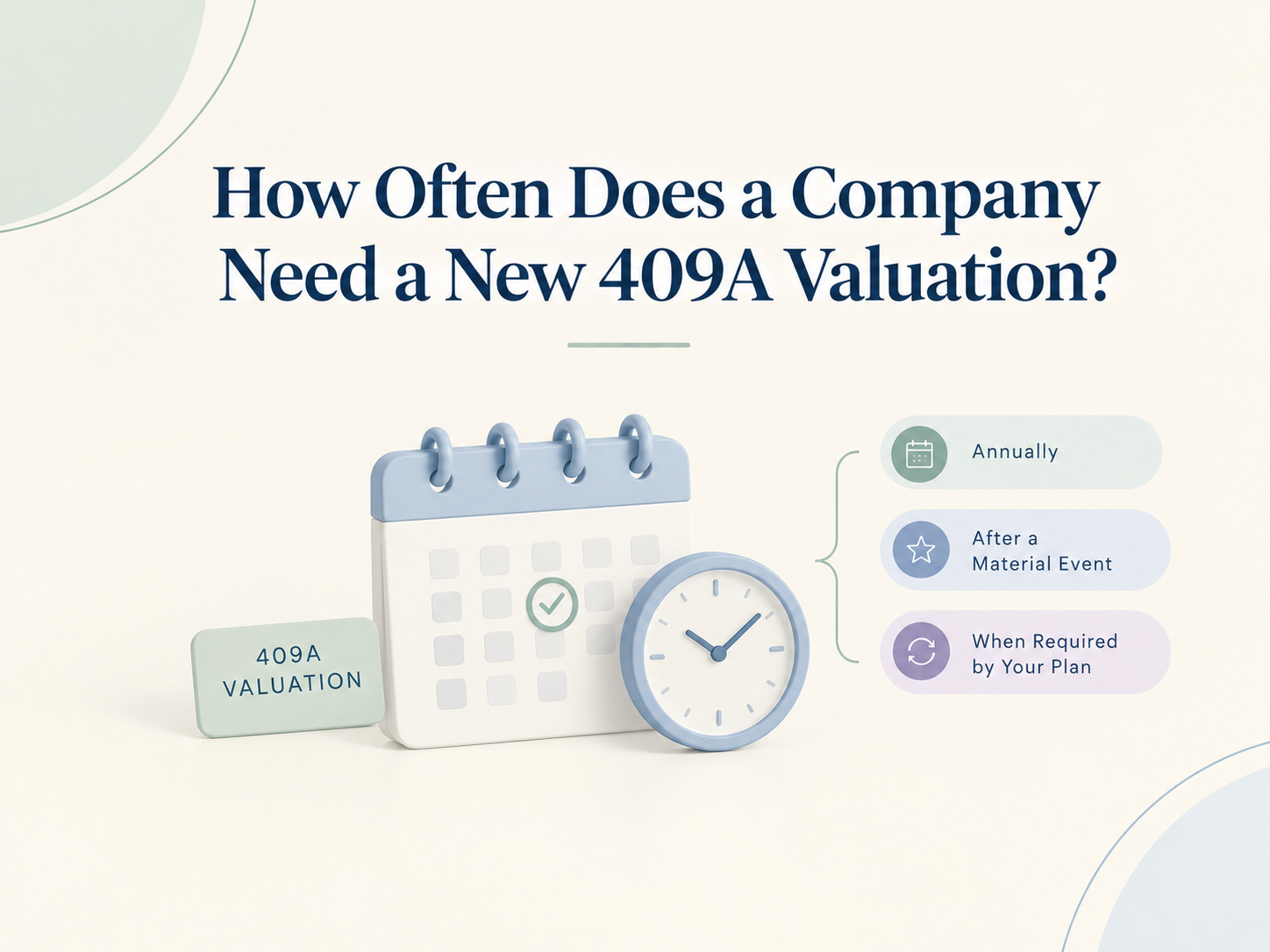
The short answer is at least once every 12 months, and sooner if something material happens that could change the company’s value.
Think of 12 months as a maximum window, not a reminder to wait until the last possible day. Knowing when to update a 409A valuation helps keep option grants properly priced and reduces the risk of tax problems for employees.
Why the Timing Matters?
A 409A valuation determines the fair market value of a company’s common stock, which is then used to set the exercise price for employee stock options.
If options are granted below fair market value, employees can potentially face additional federal tax, along with interest and other consequences. Companies therefore often rely on the 409A safe harbor, under which a valuation prepared by a qualified independent appraiser is presumed reasonable by the IRS, provided it is not more than 12 months old and there have been no material changes that would make the valuation outdated.
That second condition is easy to overlook.
The 12-Month Rule
A 409A valuation is generally considered reasonable for up to 12 months from its valuation date, assuming there has been no material change in the company or its circumstances.
Once that period has passed, the safe harbor is no longer available based on that valuation. If the company plans to continue granting options, it should obtain an updated valuation. A simple way to manage this is to record the valuation date and set a reminder well before the 12-month mark. Starting the refresh a few weeks early can help avoid a situation where the company needs to make a grant but does not have a current valuation in place.
Events That Can Trigger an Earlier Refresh
You do not always have to wait 12 months. A significant event can make an existing valuation outdated much sooner.
Common examples include:
- A new funding round: Particularly a priced round or financing at a significantly different valuation.
- An acquisition offer or term sheet: A serious offer can provide new information about what the company may be worth.
- A major change in the business: This could include a significant customer win or loss, a major product launch, or an unexpected change in revenue.
- A change in capital structure: For example, issuing a new class of shares, substantially increasing the option pool, or completing a recapitalisation.
- A major market or industry shift: Changes in the way comparable companies are being valued can affect the company’s own valuation.
- A secondary share sale: Particularly where shares are sold at a price materially different from the existing valuation.
- Preparing for an IPO or sale: As an exit gets closer, the company’s value can change quickly and valuations typically receive greater scrutiny.
The key question is simple: Would a reasonable person believe that the existing valuation no longer reflects the company’s current value? If the answer is yes, it is worth considering a refresh before making additional option grants.
How Often Should You Refresh at Different Stages?
Early-stage companies: An annual valuation may be sufficient if there are no major changes. However, many companies refresh following a financing round.
Fast-growing companies: Companies experiencing rapid changes in revenue, operations, or valuation may choose to refresh every six months or after significant milestones.
Late-stage and pre-IPO companies: Quarterly updates are common in some cases because the company’s value can change rapidly as an exit approaches.
These are practical approaches, not separate legal requirements. The underlying principle remains the same: stay within the 12-month window and update sooner when a material event occurs.
Don't Forget Financial Reporting
409A valuations can also matter for financial reporting under ASC 718, which covers stock-based compensation. The fair value of common stock is relevant when determining the accounting value of stock options, and auditors may look closely at whether the valuation was current and appropriate when the options were granted.
Keeping your 409A refresh process aligned with your financial reporting can therefore make things easier during an audit as well.
What Happens If You Wait Too Long?
Using an outdated valuation can create problems beyond simply having an old report.
- Options may be granted at a price that is below the appropriate fair market value, potentially creating tax issues for employees.
- Auditors may question the valuation used in the company's financial statements.
- Investors or potential acquirers may raise valuation concerns during due diligence, which can slow down a transaction.
A good rule of thumb is to refresh your 409A valuation at least every 12 months, after a priced funding round, and whenever a significant event could materially affect the company's value. If your valuation is approaching its 12-month mark or the company is going through a major event, do not wait until the last minute. Start the process early and make sure the updated valuation is available before issuing new option grants.
It also helps to keep a simple record of valuation dates, grant dates, and major corporate events. That small step can make it much easier to manage the process and avoid unnecessary surprises. Because 409A requirements and individual circumstances can vary, companies should confirm their specific situation with a qualified tax, legal, or valuation professional.