Loading…


Loading…
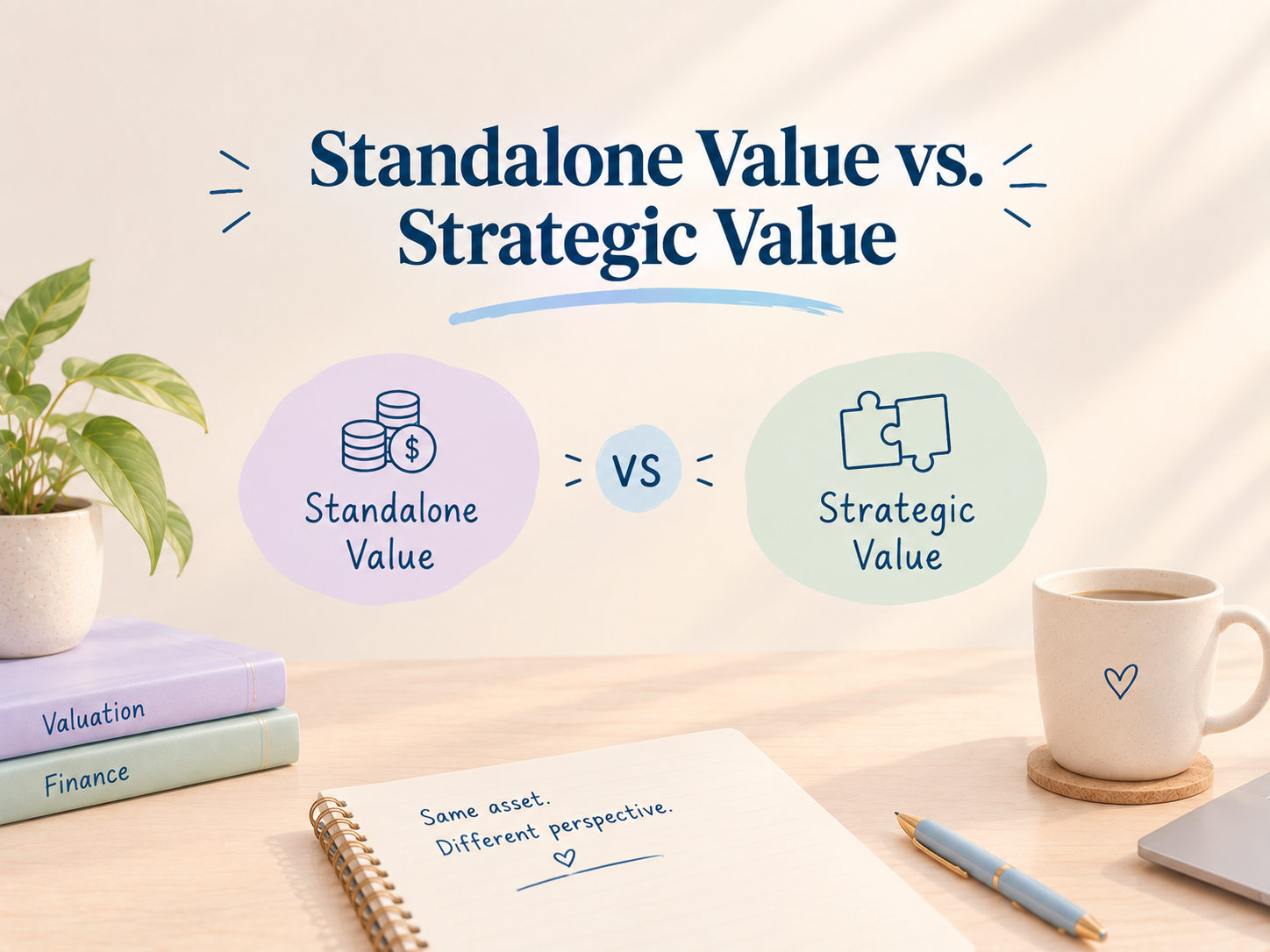
Explore the difference between strategic value and standalone value in M&A, including how synergies, buyer-specific benefits, and market assumptions can influence the value of a business in a transaction.
The same company can be worth two genuinely different amounts to two different buyers, and neither number is wrong. Standalone value asks what the business is worth exactly as it stands today, operating on its own. Strategic value asks what it's worth to a specific acquirer, once the benefits only that acquirer could realize are factored in. Confusing the two is one of the more common ways negotiations stall, or valuations get challenged after the fact.
What Standalone Value Actually Measures?
Standalone value, sometimes called market value shows how much a company is worth. It is based on the companys cash flows. It is based on the companys assets. It is based on the companys position in the market. It is valued as if the company will keep running on its own. It is valued as if the company will keep running with the people in charge. It is valued as if there are no changes, from a buyer. This is the number a DCF model produces using the company's own projections, and the number most comparable company multiples are built to approximate.
This is also the value that is usually needed for compliance reasons. A Rule 57 valuation, an Ind AS fair value measurement, a FEMA pricing certificate. Exactly because these systems require a defendable buyer-neutral number instead of one that depends on who happens to be interested, in buying the company at that time.
What Strategic Value Adds on Top
Strategic value starts from standalone value and adds the specific benefits a particular acquirer could realize that the company could never generate on its own. This typically includes cost synergies from combined operations, revenue synergies from cross-selling into an acquirer's existing customer base, elimination of a genuine competitive threat, or access to a market, technology, or license the acquirer couldn't otherwise obtain on comparable terms.
Because these benefits are specific to one acquirer's particular circumstances, strategic value is never a single, universal number the way standalone value aims to be — the same target can carry meaningfully different strategic value to two different potential acquirers, depending on how much genuine synergy each one could actually realize.
Why the Gap Between the Two Matters So Much in Negotiation
The difference between standalone and strategic value is effectively the pool of value available to be split between buyer and seller in a negotiation. A seller who knows the acquirer’s strategic rationale, the specific synergies that this particular buyer stands to gain has real grounds for the seller to negotiate a premium above the standalone value. A seller who accepts an offer anchored only to standalone value, in a situation where the acquirer clearly stands to realize substantial synergies, is effectively leaving that synergy value entirely on the table.
This is precisely why the same company can rationally receive different offers from different bidders in a competitive process. Each acquirer is pricing in a different, genuinely acquirer-specific strategic value, layered on top of the same underlying standalone value.
Where This Distinction Creates Real Problems
In minority shareholder disputes, a valuation prepared for a buyout or an oppression matter should generally reflect standalone value, since a minority shareholder is being bought out of the company as it stands, not compensated for synergies a specific acquirer might realize in some hypothetical future transaction. Courts and tribunals have generally been cautious about importing acquirer-specific strategic premiums into a standalone fair value determination in this context.
In statutory and tax valuations, using a strategic value amount when a separate value is really needed. Or the other way around. Leads to a number that won't hold up to review. This is because these systems are usually based on the buyer- separate value idea. The idea is to prevent the number from changing depending on who's interested, in the company.
In M&A negotiations themselves, a seller who fails to distinguish between the two risks anchoring an entire negotiation to a number that's needlessly conservative, given the specific strategic value a motivated acquirer may already be prepared to pay for.
Standalone value and strategic value aren't competing methodologies .They're two different questions, and the right one to ask depends entirely on the purpose. Regulatory and minority-shareholder valuations generally call for standalone value. A live M&A negotiation calls for understanding the acquirer's specific strategic value as well, since that's where the real negotiating room actually sits. Conflating the two, in either direction, tends to leave one side of a transaction with a number that doesn't reflect what's genuinely on the table.