
Understanding the Finnerty Method in Business Valuation

Understand the Finnerty Method and how it is used to estimate discounts for lack of marketability, including its key assumptions, calculation approach, and application in private company valuation.
The Finnerty Method is a quantitative approach used to estimate a discount for lack of marketability, often shortened to DLOM. This discount reflects the fact that restricted or illiquid shares, ones that can't be freely sold on an open market, are worth less than otherwise identical shares that trade freely. The method is commonly applied in 409A valuations, gift and estate tax valuations, litigation, and other contexts where a private company's shares need to be discounted to reflect their lack of liquidity.
Developed by finance professor John Finnerty, the method takes a different approach than older, more commonly criticized techniques. Rather than relying on averages from restricted stock studies or pre-IPO transaction data, it uses an options-based framework grounded in the economics of what illiquidity actually costs a shareholder.
The Core Idea Behind the Method
The Finnerty Method treats the inability to sell a share immediately as similar to holding a put option that the shareholder doesn't have. If an investor could buy an at-the-money put option, they could lock in today's stock price and protect themselves against a decline in value during the restriction period. Since a holder of restricted stock can't do that, the theoretical cost of that missing protection becomes the estimate for the marketability discount.
In simpler terms, the method asks a specific question: if a shareholder could hedge away the risk of the stock's price falling while they're forced to hold it, what would that protection cost? That cost, expressed as a percentage of the stock's value, becomes the DLOM.
How the Calculation Works
The Finnerty Method uses the Black-Scholes option pricing framework to estimate the value of an average-strike put option. It requires several key inputs:
- Stock price at the valuation date, which serves as the starting point
- Volatility, usually estimated from a set of comparable publicly traded companies since a private company has no observable trading history
- Restriction period, meaning how long the shares are expected to remain illiquid
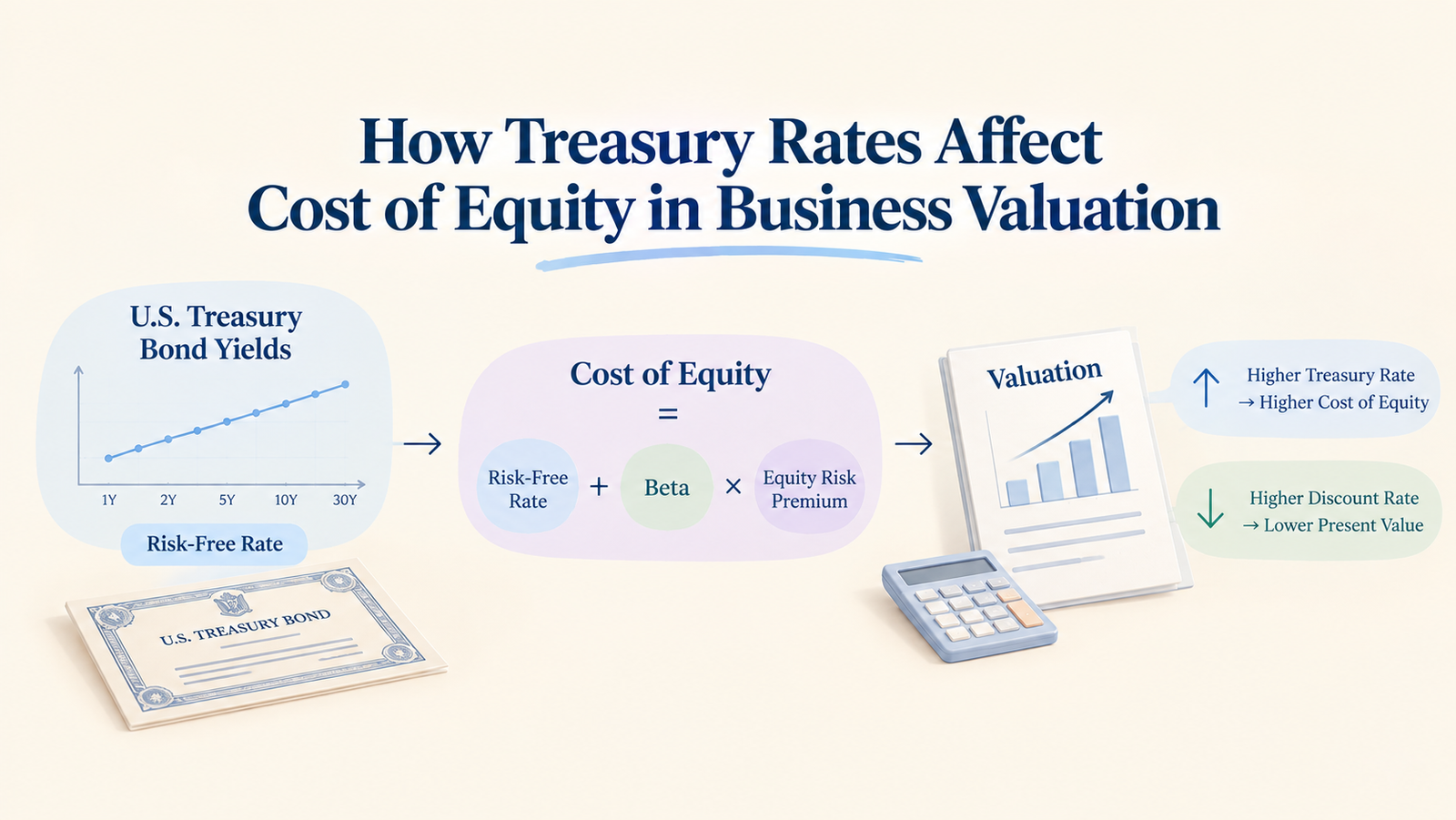
- Risk-free rate, matched to the length of the restriction period
- Expected dividends, if any, during the holding period
The model then calculates what an average-strike Asian put option would be worth, since the payoff is based on the average price over the restriction period rather than the price at a single point in time. This average-strike feature is a defining trait of the method and is meant to reflect the fact that a shareholder trying to sell restricted stock would likely do so gradually rather than all at once.
The resulting option value, divided by the starting stock price, gives the discount for lack of marketability as a percentage.
Why Volatility Matters So Much
Volatility is usually the input that has the biggest effect on the result. Higher volatility means a bigger potential swing in stock price during the restriction period, which means the hypothetical put option protecting against that swing would be worth more, and therefore the marketability discount comes out higher.
This is one reason the choice of comparable companies matters a great deal. Selecting a set of guideline public companies with volatility that doesn't genuinely reflect the subject company's risk profile can skew the discount meaningfully in either direction.
How It Compares to Other DLOM Methods
Two other approaches are commonly used alongside or instead of the Finnerty Method.
Restricted stock studies look at historical discounts observed when public companies issued restricted shares to investors, comparing the restricted share price to the freely traded price at the time. Critics note these studies often reflect a mix of factors beyond pure illiquidity, and the underlying data can be dated.
The Chaffe Method is similar to Finnerty's in that it's also options-based, but it uses a standard at-the-money European put option instead of an average-strike Asian put. It tends to produce somewhat higher discounts because it assumes the shareholder sells all their shares at once at the end of the restriction period, a less realistic assumption for most situations.
The Finnerty Method generally falls in a reasonable middle ground and is well regarded for being grounded in option pricing theory rather than empirical averages pulled from unrelated transactions.
Limitations to Keep in Mind
The Finnerty Method isn't without drawbacks. It depends heavily on assumptions about volatility and the length of the restriction period, both of which involve judgment calls that can be challenged. It also assumes a level of sophistication in modeling that can be difficult to explain to non-technical audiences, such as company boards or, in litigation, a judge or jury. And like any model, it produces a theoretical estimate rather than an observed market price, so it works best as one input among several rather than the sole basis for a discount.
Why It Matters for 409A Valuations
In the context of 409A valuations specifically, the Finnerty Method is often used to estimate the DLOM applied to common stock, which is typically the least liquid and most subordinated class of equity in a private company's cap table. Getting this discount right matters because it directly affects the strike price set for employee stock options. Too low a discount can overstate the common stock's fair value and make options less attractive; too high a discount can invite scrutiny from auditors or the IRS.
The Finnerty Method offers a theoretically grounded way to estimate the discount for lack of marketability by modeling the cost of a hypothetical put option that would protect a shareholder from price declines during a restriction period. It relies on inputs like volatility, time horizon, and the risk-free rate, and tends to produce more moderate, defensible discounts than some historical alternatives. For companies going through a 409A valuation or facing a valuation dispute, understanding how this method works helps make sense of where the numbers come from and why they matter.