
US Federal Reserve Rates: Understanding the Impact on WACC and DCF
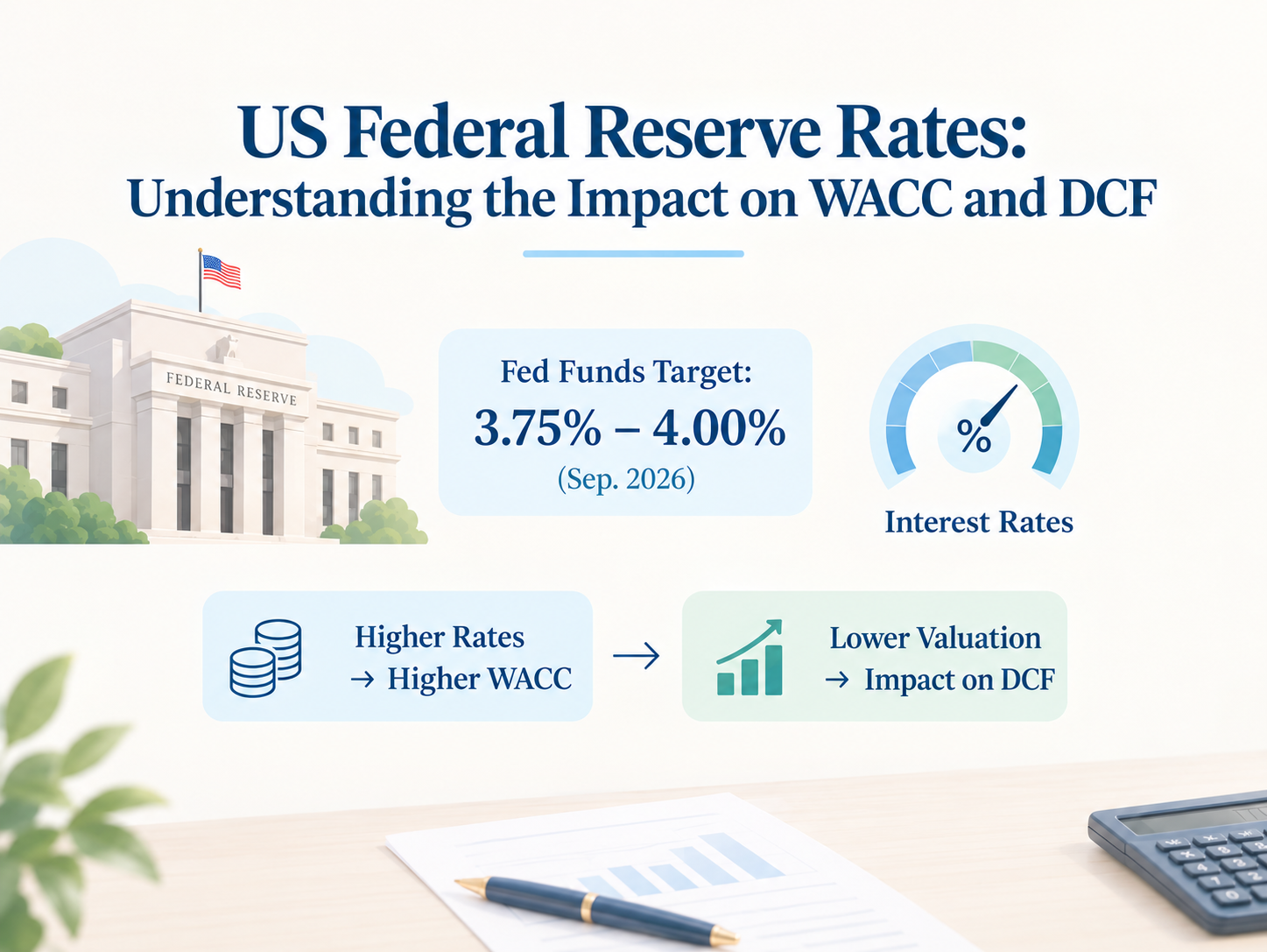
Understand how U.S. Federal Reserve rates can influence WACC and DCF valuations, from changes in the risk-free rate and cost of debt to discount rates, projected cash flows, and overall business value.
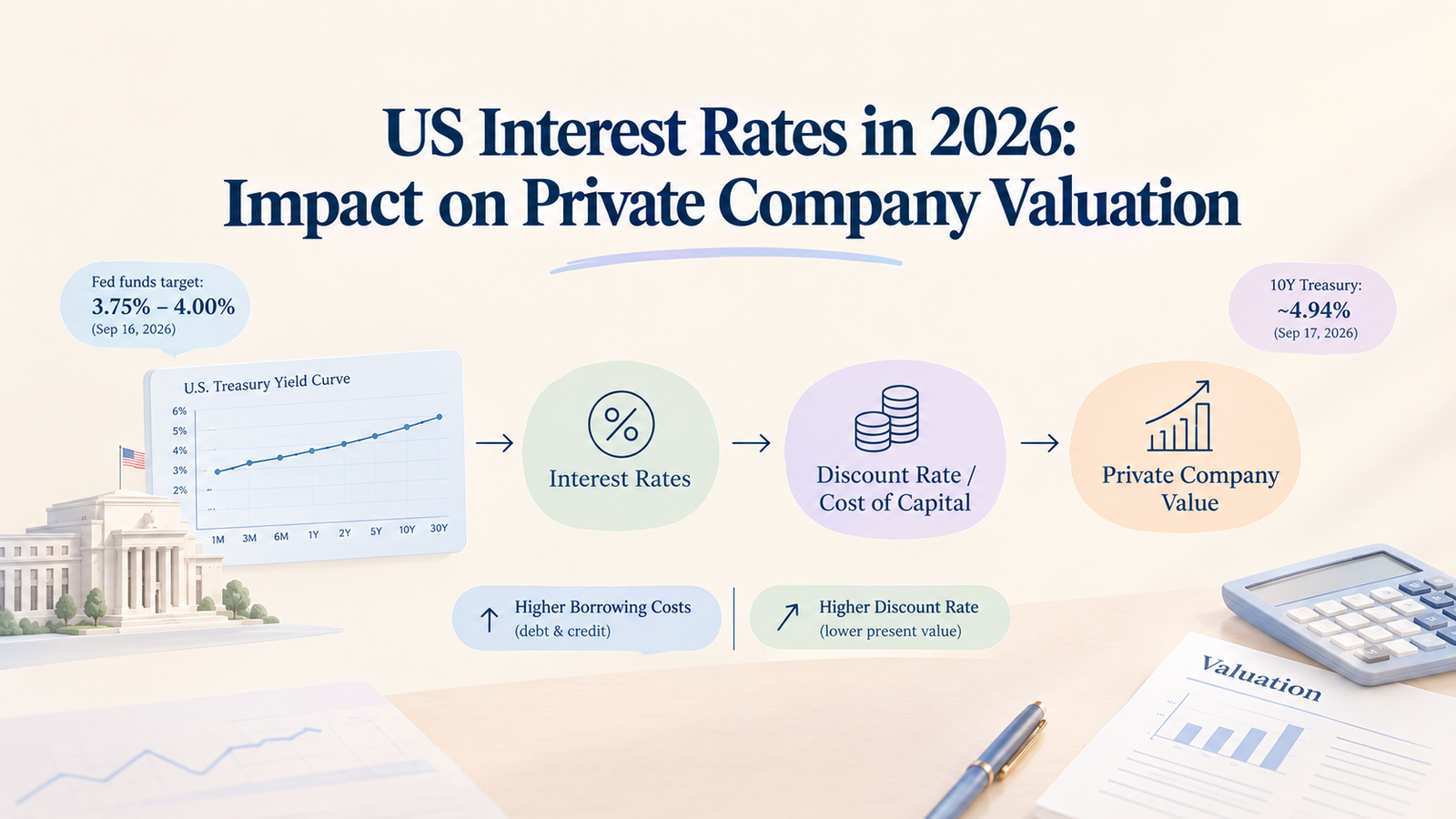
The Federal Reserve does not directly set the discount rate used in a DCF valuation. There is no formula that uses the funds rate directly. The Federal Reserve does not directly set the discount rate used in a DCF valuation. There is no formula that uses the funds rate directly.Yet Fed policy still reaches into WACC through two genuinely distinct channels, one direct and one indirect, and conflating them is a common source of error in how practitioners actually think about rate-driven valuation changes.
The Direct Channel: Cost of Debt
The interest rate that the federal reserve sets has an effect on how much it costs to borrow money for a short time. The prime rate usually follows the decisions of the federal reserve closely. Also loans that have rates that change based on something, like SOFR or other similar measures will change their rates quickly after the federal reserve makes a decision. This change happens in a few days, not months.For a company carrying meaningful floating-rate debt, a Fed rate change flows almost immediately into actual interest expense and, from there, into the after-tax cost of debt component of WACC.
This is a genuinely mechanical, near-real-time transmission. A business with a floating-rate credit facility sees its true borrowing cost shift essentially as fast as the Fed itself moves, independent of anything happening in bond markets more broadly.
The Indirect Channel: Cost of Equity, Through Treasury Yields
The federal funds rate is a short-term policy rate. The risk-free rate used in CAPMs cost of equity calculation is properly drawn from dated Treasury yields. Commonly the 10-year. Which don't move in lockstep with Fed policy at all. Long-term yields are shaped by inflation expectations, fiscal supply, global capital flows, and market expectations about the Fed's future path, not simply where the Fed funds rate happens to sit today.
This distinction matters enormously in practice. A Fed rate hike can, in principle, coincide with falling long-term yields if markets interpret the move as successfully taming inflation and reducing the need for further tightening later i.e. the so-called "hawkish but yields fall" scenario. Equally, long-term yields can rise even as the Fed holds steady, if markets grow more concerned about fiscal deficits or persistent inflation independent of near-term policy. Treating a Fed rate change as automatically moving the DCF discount rate one-for-one misreads this relationship.
Why WACC Feels This From Both Directions at Once
For a leveraged private company, a Fed tightening cycle can genuinely compress value from two directions simultaneously: cost of debt rises directly and quickly through floating-rate exposure, while cost of equity may also rise if long-term Treasury yields move in sympathy with the policy shift, even though the two aren't mechanically linked. The valuation model that only follows one of these channels can miss the impact of a genuine rate cycle. For example the valuation model may update the discount rate when the Treasury yield moves. It may keep the old interest expense assumption, in the cash flow projections.. It may do the reverse. In either case the valuation model underestimates the effect of a genuine rate cycle.
The Terminal Value Amplification
Whichever channel drives the change, the effect compounds most heavily through terminal value, which typically represents the majority of a DCF's total valuation and is calculated by dividing by the gap between the discount rate and the long-term growth rate. A small increase in WACC whether from debt or equity has a bigger effect on terminal value than on the near-term forecast. That means the real impact of a rate change driven by the Fed is usually much greater, than what you might think by just looking at the discount rate adjustment.
Practical Implications for a Valuation Prepared Today
Model the cost of debt and cost of equity channels separately, rather than assuming a single blended rate shift captures both, particularly for a company with meaningful floating-rate exposure.
Use the appropriate Treasury maturity for cost of equity, and don't assume it moves in lockstep with the federal funds rate. Verify the actual current yield rather than inferring it from Fed policy announcements alone.
Revisit interest expense projections directly for any leveraged private company, given how quickly floating-rate costs reprice relative to the slower-moving, more independent path of long-term yields.
Federal Reserve policy affects business valuation through cost of debt almost immediately and mechanically, and through cost of equity only indirectly, filtered through long-term Treasury yields that follow their own, partially independent logic. A valuation that treats these as one single rate effect risks missing how a Fed decision flows into WACC. It also risks missing how a Fed decision flows into terminal value and the effect on terminal value is disproportionate. The impact on WACC and, on value can be sizeable.